Top 8 Vulnerability Management Tools
Explore the best VRM software to streamline due diligence, monitor vendors in real time, and support compliance, reporting, and business continuity.
Published on October 27, 2025
Last updated on January 07, 2026
Modern workplaces are more complex, data-driven, and interconnected than ever before. With increasing regulatory pressures, the rising importance of employee wellbeing, and a growing emphasis on operational resilience, organisations cannot afford to overlook occupational health and safety (OHS). Software designed to manage health and safety provides a structured, auditable framework that helps organisations protect their people, comply with regulations, and reduce operational risk.
The right OHS platform enables real-time incident reporting, centralised record keeping, and streamlined compliance monitoring. It also fosters a proactive safety culture, helping leaders identify patterns, prevent recurrence, and continuously improve safety performance.
Below, we explore what OHS software is, what features to look for, and the top platforms to consider in 2026.
Occupational health and safety (OHS) software is a specialised tool designed to manage workplace safety, compliance, and employee health. It centralises data and workflows associated with incident reporting, risk assessment, audits, training, and compliance management, helping organisations create safer, more transparent workplaces.
By digitising manual safety processes, OHS software allows teams to capture, analyse, and report on health and safety metrics in real time. This facilitates faster incident resolution, improved compliance tracking, and data-driven decision-making. Ultimately, OHS software helps organisations not only meet regulatory requirements but also promote a culture of prevention and accountability.
Choosing the right OHS solution means understanding the features that drive measurable safety outcomes.
Allows employees to log incidents and near-misses quickly, enabling swift investigation and corrective action. Comprehensive logging improves root cause analysis and helps prevent recurrence.
Supports hazard identification, risk evaluation, and control implementation. By quantifying risk levels, the software helps prioritise mitigation and track residual risks.
Facilitates internal audits and workplace inspections with custom checklists, automated reminders, and compliance tracking — reducing manual oversight and error.
Tracks regulatory obligations and documentation, ensuring adherence to ISO 45001 and regional laws. It helps maintain up-to-date records for audits and external reviews.
Maintains records of employee training, certifications, and renewals. This ensures only qualified personnel perform specific tasks, reducing operational risks.
Provides visual insights into safety metrics, trends, and KPIs. Customisable dashboards enable leadership to make informed decisions based on real-time safety performance.
Connects with HR, ERP, or risk management systems for a single source of truth. Automations reduce administrative workload and help maintain data consistency.
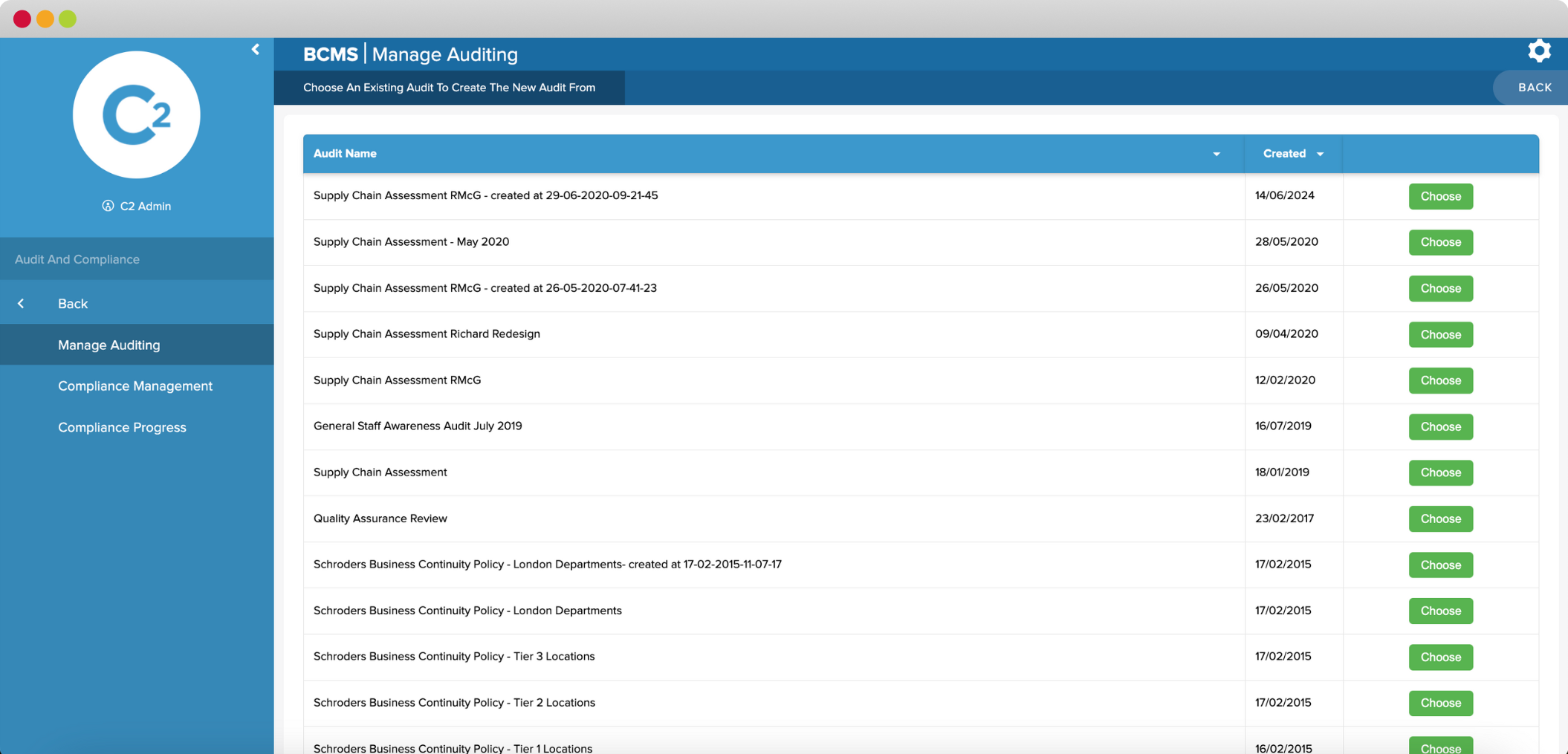
Continuity2’s Meridian platform brings together business continuity, operational resilience, and occupational safety in a single system. It enables organisations to manage incidents, assess risks, and monitor compliance from one central dashboard. Its analytics engine transforms raw data into actionable insights, allowing leaders to identify safety trends and track key metrics across departments.
Key Features:
Best for: Large and mid-sized enterprises seeking an integrated approach to operational resilience and safety.

Cority delivers a unified environment for EHS (Environment, Health, and Safety) management. It is widely used by global enterprises that require advanced compliance and reporting capabilities.
Key Features:
Best for: Enterprises needing a configurable and data-rich OHS system.

Intelex provides a cloud-based solution for managing environment, health, and safety data. The platform’s flexibility makes it suitable for industries ranging from construction to manufacturing.
Key Features:
Best for: Organisations seeking robust compliance tracking and workflow automation.

SafetyCulture (formerly iAuditor) focuses on simplifying safety inspections and operational checks. Its mobile-first approach helps teams capture, share, and act on safety observations instantly.
Key Features:
Best for: Field-based organisations prioritising user-friendly mobile inspections.

SiteDocs offers a straightforward platform for managing safety documentation, training records, and compliance reports. It is particularly popular among contractors and construction firms.
Key Features:
Best for: SMEs in construction and trade sectors.

KPA provides a strong mix of compliance management and workforce training tools designed to keep employees engaged and informed.
Key Features:
Best for: Organisations with diverse teams and extensive training needs.

Workhub combines OHS compliance, training, and documentation in one system. It supports automation of onboarding and qualification management.
Key Features:
Best for: Businesses focused on improving workforce engagement and compliance tracking.

GoCanvas helps digitise paper-based safety processes through mobile data collection forms. It is best suited for companies seeking rapid deployment.
Key Features:
Best for: Organisations transitioning from manual to digital safety management.
Occupational Health and Safety software empowers organisations to manage compliance, reduce risk, and build a proactive safety culture through automation and data-driven insights.
By automating audit trails, reporting, and record management, OHS software reduces compliance risk and demonstrates accountability during inspections or external audits.
Integrated risk assessment tools enable early identification of hazards and recurring incidents, helping organisations implement effective controls and monitor outcomes.
When safety processes are accessible and easy to use, employees are more likely to report issues and complete training — driving a culture of shared responsibility.
Automation reduces administrative burden, freeing safety officers to focus on analysis and prevention rather than manual paperwork.
Dashboards and analytics provide real-time visibility into safety performance, allowing leaders to allocate resources where they are most needed.
Prioritising occupational health and safety protects not only employees but also an organisation’s reputation, productivity, and long-term sustainability. As regulatory expectations evolve and workforces become more distributed, adopting a digital-first OHS strategy is no longer optional — it is essential.
Continuity2’s Meridian helps organisations go beyond compliance by embedding OHS into the wider resilience strategy.
Book a Demo with Continuity2 to see how your organisation can strengthen its safety culture while streamlining compliance and reporting processes.
Founder & CEO at Continuity2
With over 30 years of experience as a Business Continuity and Resilience Practitioner, Richard knows the discipline like the back of his hand, and even helped standardise BS25999 and ISO 22301. Richard also specialises in the lean implementation of Business Continuity, IT Service Continuity and Security Management Systems for over 70 organisations worldwide.

Founder & CEO at Continuity2
With over 30 years of experience as a Business Continuity and Resilience Practitioner, Richard knows the discipline like the back of his hand, and even helped standardise BS25999 and ISO 22301. Richard also specialises in the lean implementation of Business Continuity, IT Service Continuity and Security Management Systems for over 70 organisations worldwide.
Explore the best VRM software to streamline due diligence, monitor vendors in real time, and support compliance, reporting, and business continuity.
Explore the best VRM software to streamline due diligence, monitor vendors in real time, and support compliance, reporting, and business continuity.
Discover the top 10 Threat Intelligence Platforms of 2026 to detect, analyse, and respond to cyber threats with greater speed and precision.
Explore the best third-party risk management software to automate vendor assessments, track compliance, and reduce exposure across your supply base.
Discover the top 7 Supply Chain Risk Management (SCRM) tools of 2026 to monitor suppliers, predict disruptions, and build supply chain resilience.
Find the best supply chain management software of 2026 and gain real-time visibility, streamline planning and logistics, and protect business continuity.
Compare the top supplier monitoring tools of 2026 and find the right software to enhance supplier visibility and protect your supply chain.
Find the best SIEM tools to detect threats faster, automate incident response, ensure compliance, and strengthen your organisation’s cyber resilience.
Choose the right risk analysis software to automate assessments, gain real-time insights, meet compliance, and strengthen resilience—see our top 7.