Top 8 Vulnerability Management Tools
Explore the best VRM software to streamline due diligence, monitor vendors in real time, and support compliance, reporting, and business continuity.
Published on October 27, 2025
Last updated on November 27, 2025
Resilience analytics and simulation tools have become essential for organisations that aim to strengthen operational resilience and business continuity. These platforms go beyond simple planning — they provide data-driven insights, scenario testing, and simulation capabilities that allow leaders to assess vulnerabilities, quantify risks, and understand how disruptions may affect operations before they happen.
With regulatory pressure increasing and interdependencies across supply chains, technology, and human factors, businesses can no longer rely solely on static continuity plans. Instead, resilience analytics tools combine modelling, automation, and real-time monitoring to provide actionable intelligence. This enables organisations to test recovery capabilities, optimise responses, and make more informed decisions during disruption.
In this list, we explore what resilience analytics and simulation tools are, the key features you should look for, and the leading platforms available today.
Resilience analytics and simulation software helps organisations assess, predict, and improve their ability to withstand and recover from operational disruptions. These tools combine data analytics, digital twins, and scenario modelling to simulate potential events — from cyber incidents and system outages to natural disasters and supply chain breakdowns.
The software enables risk and continuity teams to model business processes, identify critical dependencies, and measure the likely impact of various disruption scenarios. This empowers decision-makers to prioritise recovery efforts, allocate resources effectively, and continuously improve resilience planning based on data rather than assumptions.
By integrating with existing business continuity and risk management systems, resilience simulation platforms also help maintain compliance with regulations such as the FCA’s operational resilience framework and ISO 22301.
When choosing resilience analytics software, focus on features that combine analytical power with practical functionality. The following are key capabilities to consider.
This feature allows users to create “what-if” scenarios based on realistic data. It helps organisations understand how specific threats — such as IT failure, supplier disruption, or workforce loss — would affect critical processes.
Impact analysis tools quantify operational, financial, and reputational consequences of potential disruptions. These analytics help prioritise business functions and guide investment in resilience measures.
Dependency mapping visualises relationships between processes, people, systems, and suppliers. It enables risk teams to identify single points of failure and assess cascading effects.
Interactive dashboards consolidate data from multiple sources to provide a live view of resilience performance. They enable continuous monitoring and reporting to leadership teams.
Automation ensures that key metrics, resilience test results, and recovery performance indicators are captured and reported efficiently. This is essential for demonstrating compliance with standards like ISO 22316 and FCA requirements.
Integration with existing business continuity management systems (BCMS), governance platforms, and data sources enables a unified resilience view across the organisation.
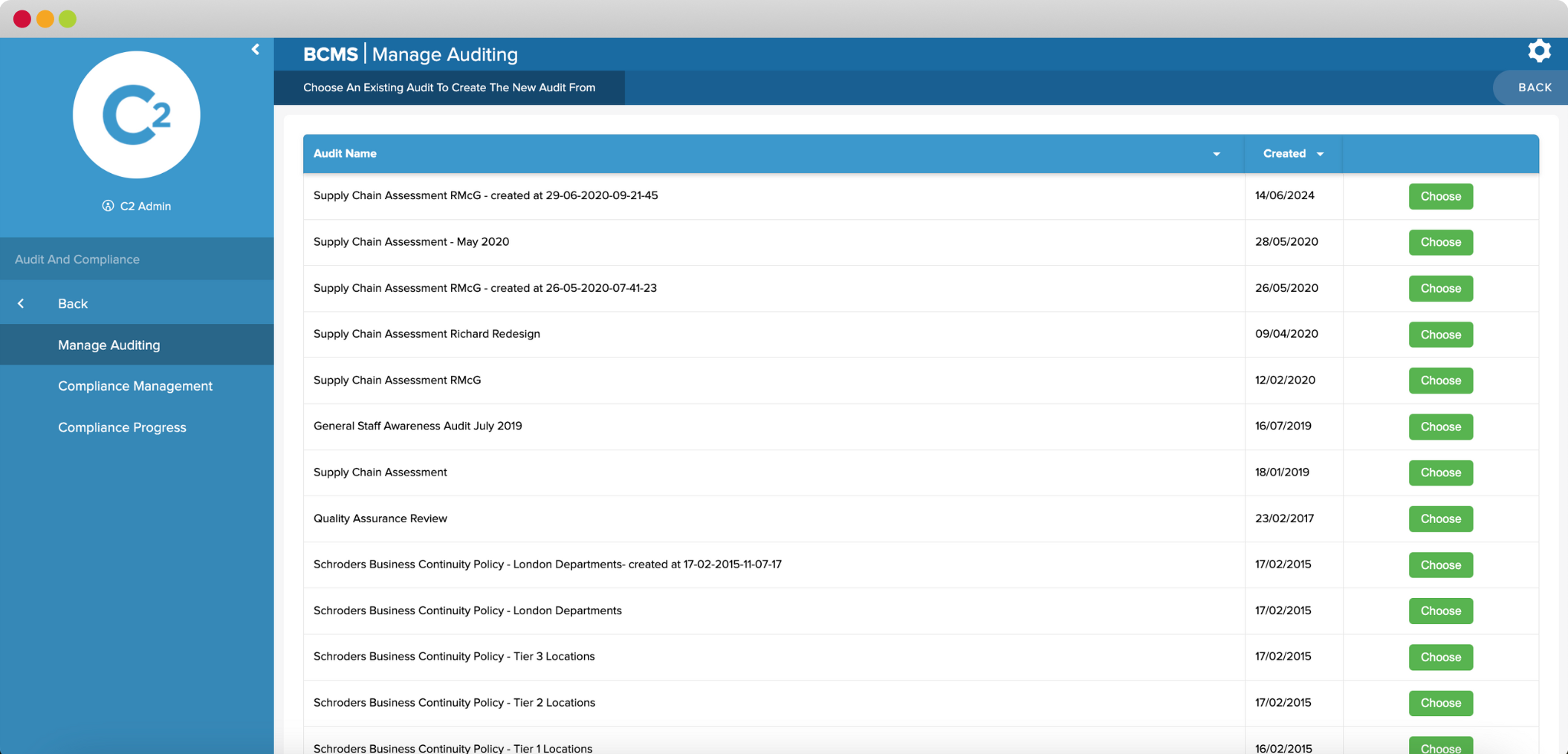
Continuity2 is an industry-leading business continuity and operational resilience platform designed to give organisations end-to-end control over resilience planning, analytics, and testing. Its built-in resilience analytics engine provides powerful modelling and simulation capabilities that allow teams to quantify impact, assess dependencies, and test continuity plans in real time.
Key Features:
Best for: Enterprises seeking a unified, data-driven platform that integrates resilience analytics, simulation, and operational resilience management.
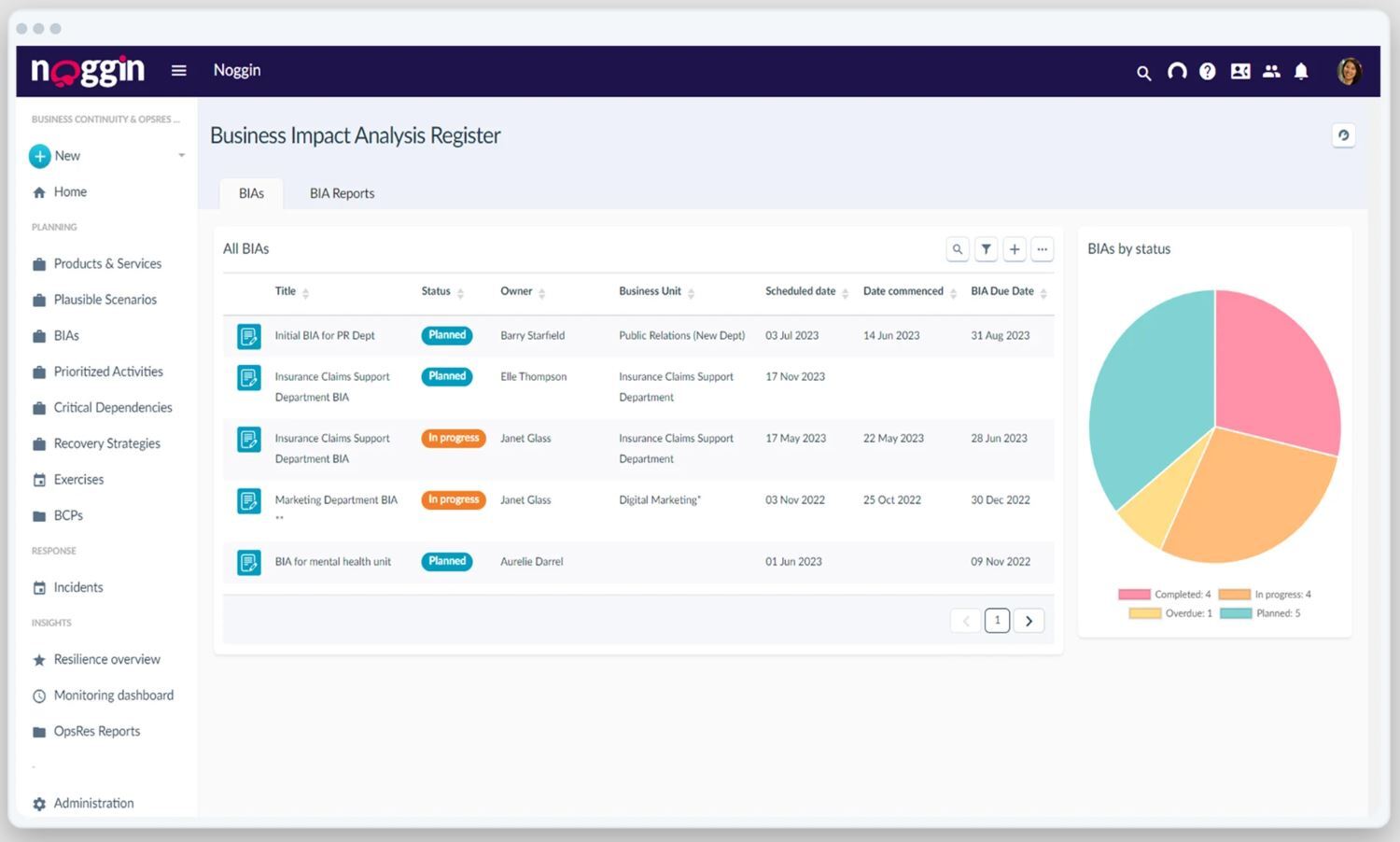
Noggin offers a flexible resilience and crisis management suite designed to enhance operational response through analytics, visual mapping, and scenario testing. It helps organisations build resilience maturity by aligning continuity and incident response data within one integrated system.
Key Features:
Best for: Organisations looking for a highly configurable resilience and incident management solution.
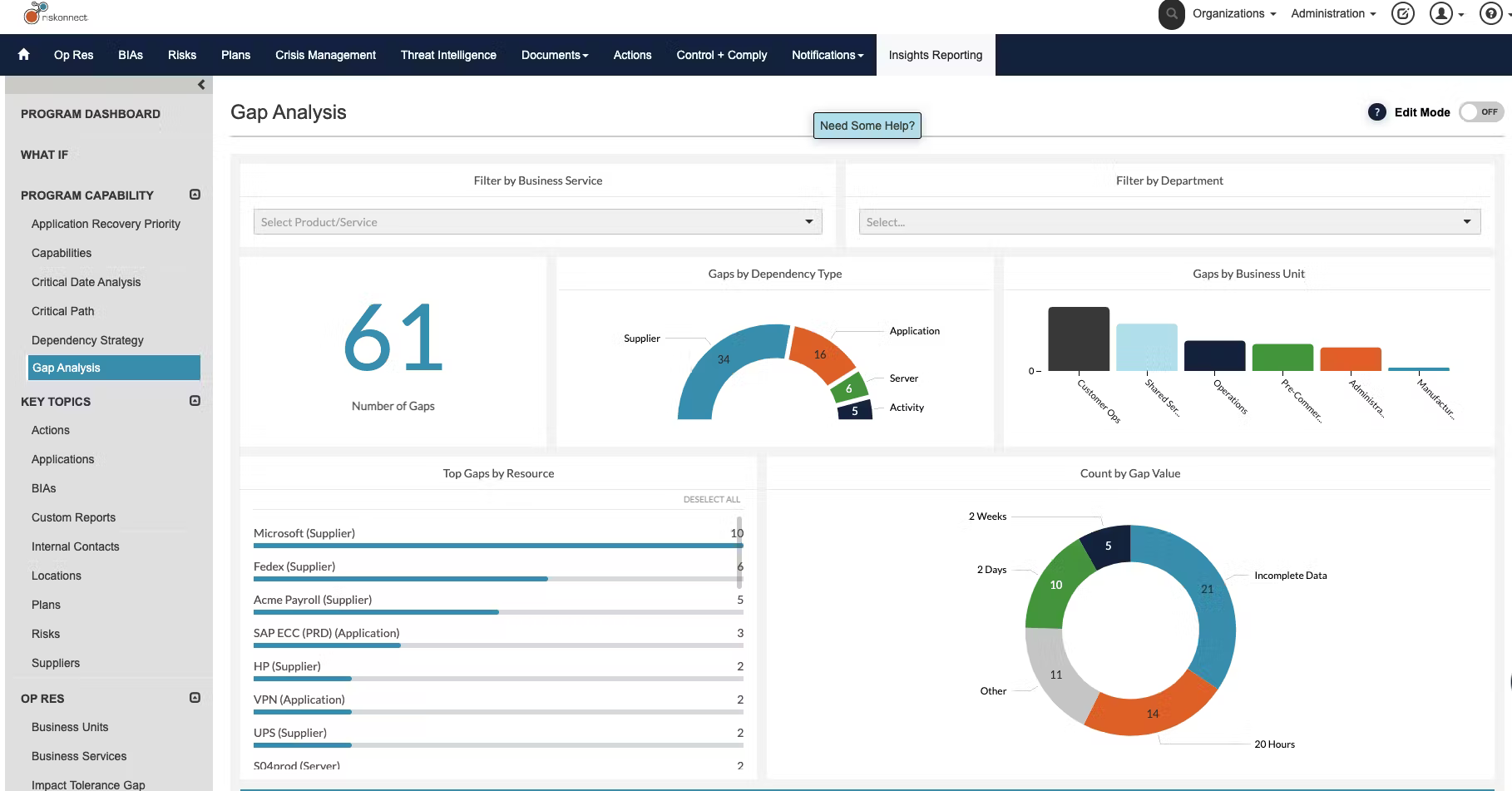
Riskonnect’s operational resilience suite offers a centralised environment for mapping processes, dependencies, and risks. Its resilience analytics help firms visualise operational interconnections and simulate the potential impact of disruptions.
Key Features:
Best for: Financial institutions and large enterprises needing comprehensive regulatory alignment.
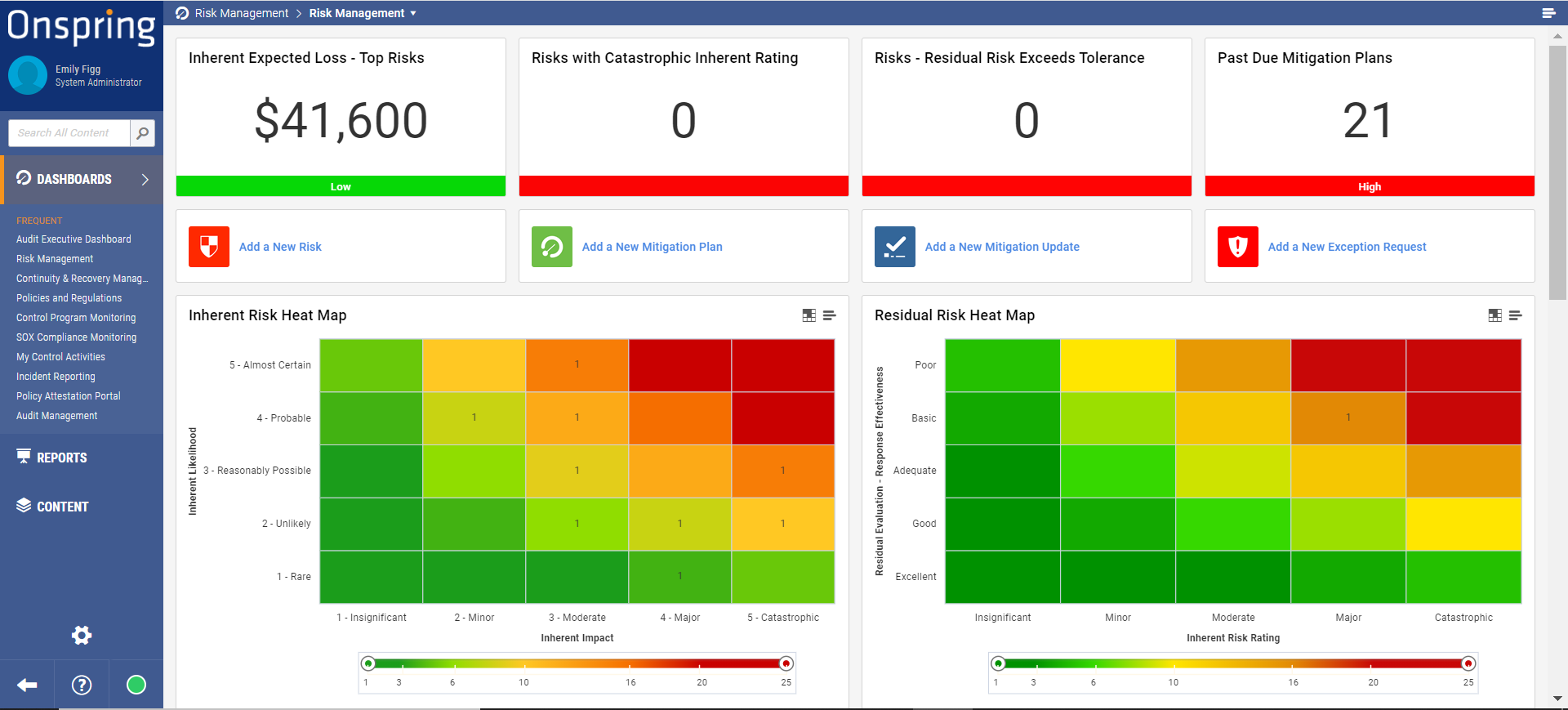
Onspring’s resilience and continuity platform combines workflow automation with advanced analytics. It supports data-driven decision-making through scenario simulation and impact assessment modules.
Key Features:
Best for: Mid-to-large organisations seeking scalable resilience analytics within a low-code environment.
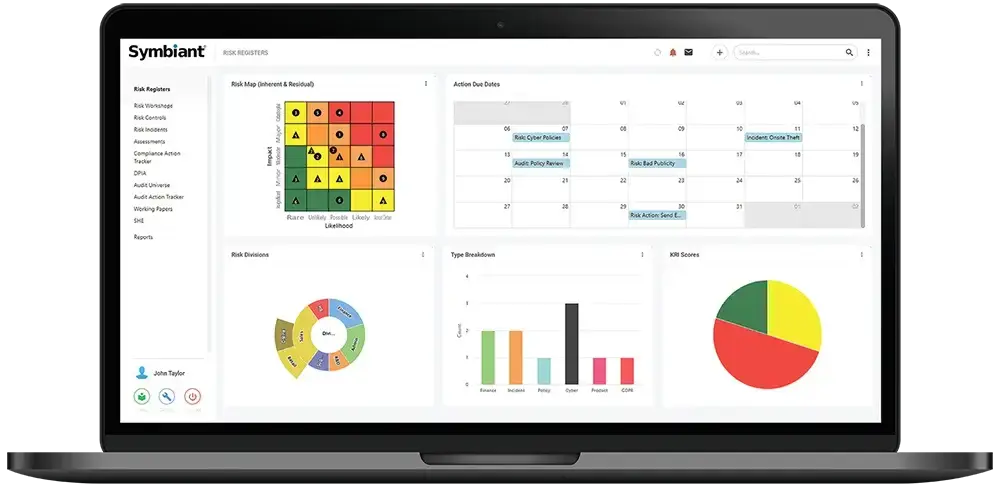
Symbiant provides an accessible cloud-based resilience and risk management suite with strong analytics and visualisation capabilities. It enables organisations to assess resilience maturity and test continuity strategies.
Key Features:
Best for: Organisations requiring intuitive, cost-effective resilience analytics tools.
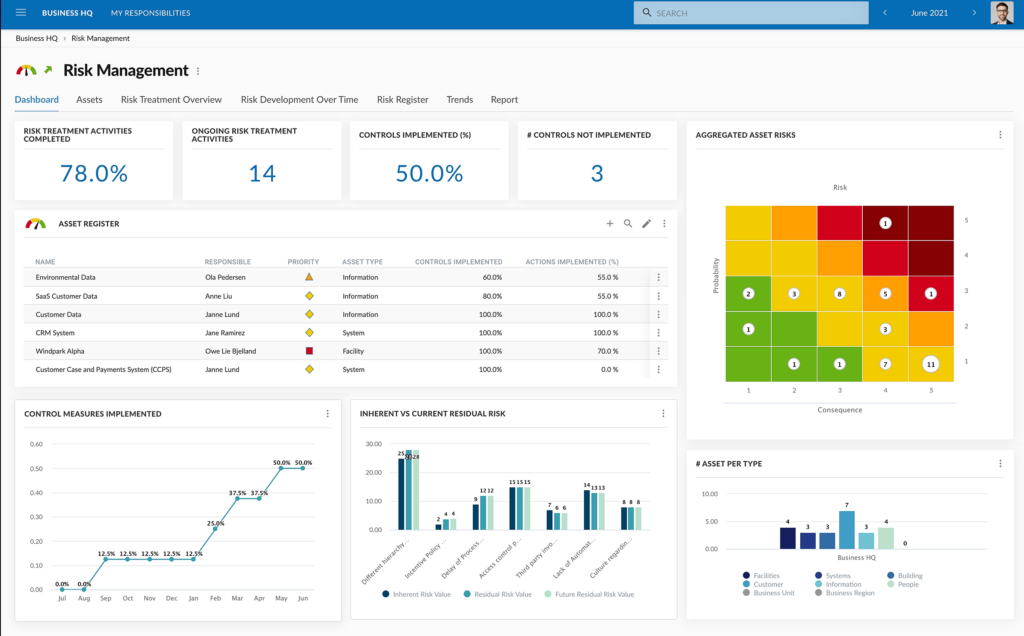
Corporater integrates resilience analytics within its broader governance, risk, and compliance (GRC) suite. It enables organisations to link resilience strategies to performance metrics and simulate outcomes across multiple business areas.
Key Features:
Best for: Organisations aiming to align resilience management with strategic and performance objectives.
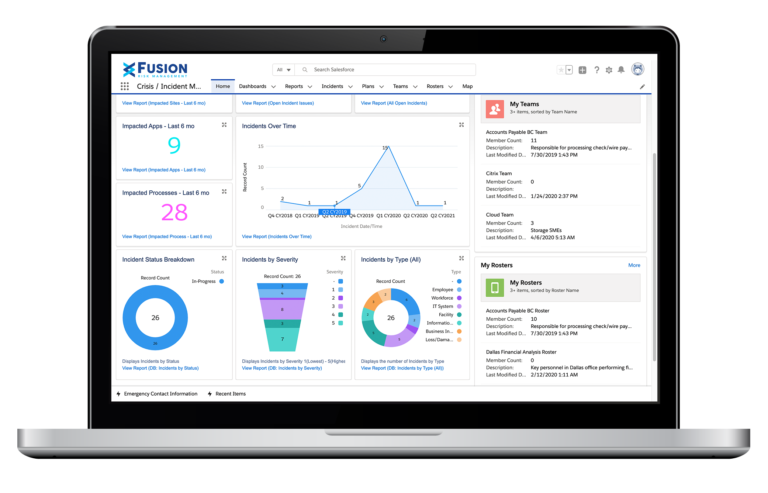
Fusion offers a powerful cloud-based operational resilience solution designed for large enterprises. It enables modelling of complex interdependencies and simulates disruptions to measure impact and recovery performance.
Key Features:
Best for: Complex enterprises requiring enterprise-wide resilience analytics and visualisation.
Resilience analytics and simulation tools enable organisations to anticipate risks, meet regulatory demands, and continuously strengthen their ability to recover and adapt.
Resilience analytics transform static data into actionable intelligence. By simulating real-world events, leaders can anticipate weak points, prioritise resources, and make informed decisions before disruptions occur.
Many regulators now require demonstrable evidence of operational resilience. Simulation tools provide the traceable testing data needed to meet these obligations efficiently.
Testing and analytics help organisations understand realistic recovery times and resource dependencies, improving their ability to restore operations quickly and effectively.
By capturing performance data from each simulation, teams can refine strategies and strengthen resilience maturity over time.
These platforms consolidate information across departments, creating a single view of organisational resilience for executives and regulators alike.
Operational resilience is no longer optional — it is a core business capability. As disruptions grow in frequency and complexity, organisations must leverage data and simulation to understand how prepared they truly are.
Continuity2’s Meridian platform stands out for integrating resilience analytics, simulation, and operational management into a single intelligent environment. It empowers teams to measure, test, and enhance resilience continuously.
Book a Demo with Continuity2 to learn how your organisation can build a measurable, data-driven resilience framework.
Founder & CEO at Continuity2
With over 30 years of experience as a Business Continuity and Resilience Practitioner, Richard knows the discipline like the back of his hand, and even helped standardise BS25999 and ISO 22301. Richard also specialises in the lean implementation of Business Continuity, IT Service Continuity and Security Management Systems for over 70 organisations worldwide.

Founder & CEO at Continuity2
With over 30 years of experience as a Business Continuity and Resilience Practitioner, Richard knows the discipline like the back of his hand, and even helped standardise BS25999 and ISO 22301. Richard also specialises in the lean implementation of Business Continuity, IT Service Continuity and Security Management Systems for over 70 organisations worldwide.
Explore the best VRM software to streamline due diligence, monitor vendors in real time, and support compliance, reporting, and business continuity.
Explore the best VRM software to streamline due diligence, monitor vendors in real time, and support compliance, reporting, and business continuity.
Discover the top 10 Threat Intelligence Platforms of 2026 to detect, analyse, and respond to cyber threats with greater speed and precision.
Explore the best third-party risk management software to automate vendor assessments, track compliance, and reduce exposure across your supply base.
Discover the top 7 Supply Chain Risk Management (SCRM) tools of 2026 to monitor suppliers, predict disruptions, and build supply chain resilience.
Find the best supply chain management software of 2026 and gain real-time visibility, streamline planning and logistics, and protect business continuity.
Compare the top supplier monitoring tools of 2026 and find the right software to enhance supplier visibility and protect your supply chain.
Find the best SIEM tools to detect threats faster, automate incident response, ensure compliance, and strengthen your organisation’s cyber resilience.
Choose the right risk analysis software to automate assessments, gain real-time insights, meet compliance, and strengthen resilience—see our top 7.